
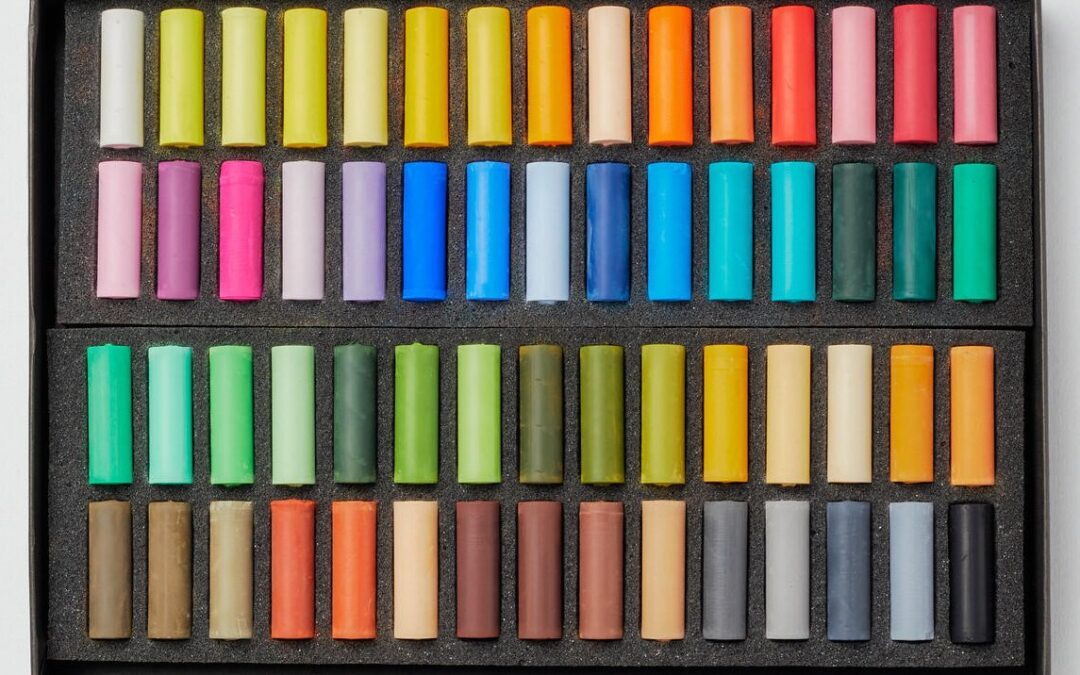
Getting Started with Chalk Pastels
A Basic Materials List for Beginners
Chalk pastels are one of the most direct and accessible painting mediums. You need very little to begin, and the setup can remain simple while still producing professional results.
1. Soft (Chalk) Pastels
What to purchase:
- Artist-grade soft pastels (avoid oil pastels)
- A starter set of 24–48 colors
- A mix of primaries, earth tones, neutrals, and a few darks
Why this matters:
Soft pastels contain high pigment concentration and blend easily. A modest set is more than sufficient for landscapes, wildlife, still life, or portrait work.
2. Pastel Paper
Recommended options:
- Toned paper (gray, sand, muted blue, or warm neutral)
- Paper specifically labeled for pastel
- Sanded pastel paper for stronger pigment adhesion
- 9x12 pad for practice
Why this matters:
Pastel requires surface texture (known as “tooth”) to hold multiple layers. Regular drawing paper will not perform well.
3. Blending Tools (Optional)
- Blending stumps
- Soft sponge
- Cotton swabs
- Your finger (the most commonly used tool)
Note:
Many beginners over-blend. In pastel work, layering often produces richer results than excessive blending.
4. Erasing & Dust Control
- Kneaded eraser
- Soft brush (for gently removing dust)
- Paper towels
- Scrap paper under your work area
Pastels produce dust. Instead of blowing on your work, tap your board gently in a vertical position to release excess pigment.
5. Basic Workspace Setup
- Drawing board or firm backing surface
- Masking tape (to secure paper)
- Easel (optional but recommended)
- Apron or protective clothing
Working upright helps pigment fall away naturally and prevents muddy color buildup.